
Iowa County Owner-of-Record Card
The Tax / Assessment Record Search is the county's public parcel lookup. Its owner card shows the roll's present entry. Field labels and the way the current owner is displayed can vary, so open the card and read it directly. When a recent transfer matters, confirm against the newest recorded deed. The table separates the fields worth checking. The card and the deed answer different questions.
| Owner of record | Current name carried on the assessment roll; exact label not verified. |
|---|---|
| Vesting or entity | Check the deed for joint, trust, LLC, or representative capacity; card field not inspected. |
| Mailing address | Tax notice destination, which may differ from the parcel situs. |
| Situs address | Physical property location; exact card wording not confirmed. |
| Deed reference | Use the latest recorded instrument and its party names to verify a transfer. |
| Ownership date | Check the recording date; an assessor last-sale field was not confirmed. |
The owner-of-record field names the party the tax roll carries. It does not show who occupies the building. A mailing address simply tells you where the tax notice goes, so it is not proof of residence or a title opinion. Estates, tax agents, companies, and lenders can all appear in a mailing field.
Verify Iowa County's Current Owner
A roll name is only the start. Confirm that the newest deed names the same grantee and describes the same parcel. Iowa County's grantor-grantee index reaches back to 1835. Portions from 1997 through 2024 carry restoration and verification caveats. Treat an owner check as a present-tense task. Use the roll for the current account. Then read the latest recorded instrument and its date.
- Open the assessment parcel that matches the property's situs and municipality.
- Read the owner field and note the mailing and situs addresses separately.
- Search the latest grantee in LandShark and compare the legal description with the parcel card.
- If the grantee is an entity, check its exact legal name in Wisconsin DFI records.
- Owner of record
- The name carried on the assessment roll at the time of lookup.
- Assessment roll
- The parcel and value record maintained for taxation.
- Situs
- The physical location of the parcel.
- Recording lag
- The time between a deed's recording and a later roll update.
Use Iowa County Owner Details Carefully
A mailing address can matter for a tax notice or a transaction. It is not the owner's home. Wisconsin's Safe at Home program gives eligible participants a substitute address, and court or property documents can also carry redactions. Ask the custodian to correct record errors. Respect any protected information you encounter.
Lawful use. Use owner information for a legitimate property matter. Do not use a name, mailing address, or parcel map to stalk, threaten, or harm anyone.
Iowa County Owner Field Timing
The county sets no fixed refresh schedule for its assessment vendor. Timing between a closing and an owner-card change varies. A new deed can be more current. The roll still anchors the parcel's assessment and billing identity. When the two records disagree, compare the recording date and the legal description before deciding whether they describe the same transfer.
The route from a property address to an owner name is laid out on the Iowa County ownership route. Here the focus stays on the current name. Confirmation is the goal.
Assessment systems and recorder indexes update on separate schedules. An entry may sit under review, get corrected, or land under a name variation. Skip fixed day counts entirely. For an active transaction or an estate, request a current title search. Get certified copies from the custodian. A public owner card is not a real-time guarantee.
Iowa County Deed Index Confirmation
LandShark opens the Register of Deeds index remotely. Search the owner as grantee. That identifies the instrument that vested the current recorded interest. The county says 2025 to the present supports party and legal-description search. Older restored years have year-specific availability. Live fields can change. Treat the portal as an entry point rather than a sample result. The Iowa County LandShark portal is the place to run the grantor-grantee check.
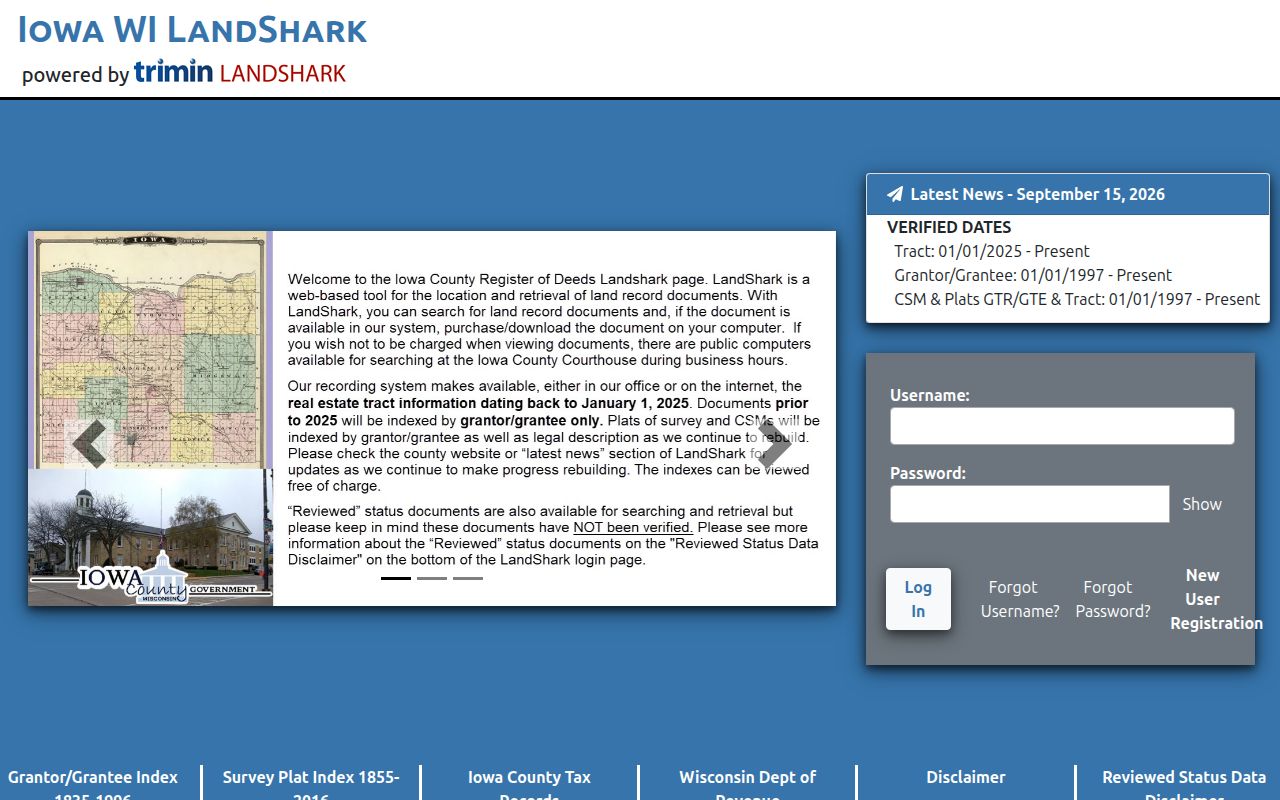
Compare the latest grantee, recording date, and legal description with the assessment parcel. Only then treat the name as current.
For records dated 2011 through 2024, staff instructions call for the document number and an approximate date. Older records may need a volume and page. Restored years vary in search fields and verification status. If your question turns on one transaction, save the result and ask staff to confirm the instrument. Do not rely on a partial image.
The courthouse public computers offer another way to inspect a land-record image. That helps when a remote result is incomplete. Staff copy requests should include enough detail to separate similarly named parties. The posted fee is charged per document page. Phones and cameras are barred from the search area, so bring a written list of names, dates, parcel descriptions, and document references instead of planning to photograph the screen.
Iowa County Restoration Status Affects Checks
The 2025 cyber incident disrupted index searching and image retrieval. The county says no documents were lost. Its August 2026 update describes a rebuilt 1835-to-present index built from older files, LandShark images, and verified imports. A recent deed can look missing. Check the current verified-year notice in that situation, because the portal may show a result with an unverified warning that is not a confirmed record. The county restoration status page has the coverage detail.
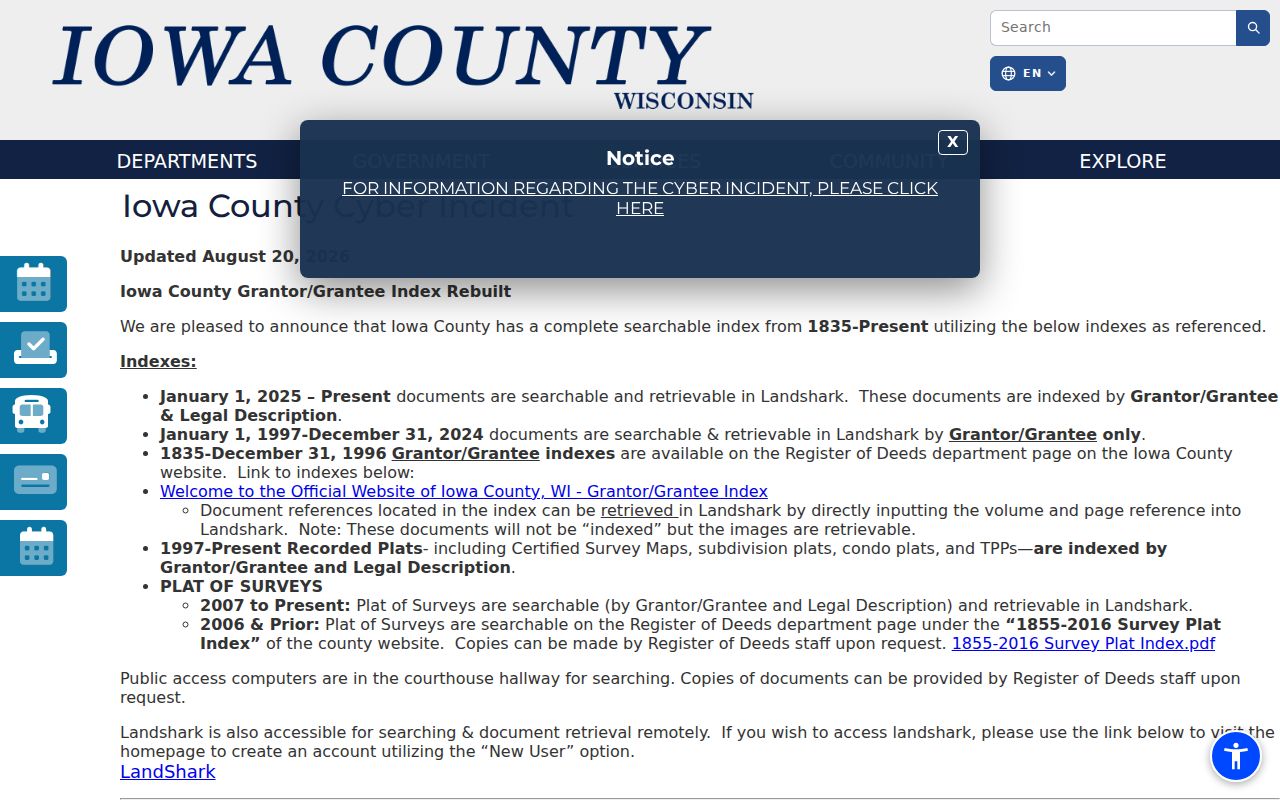
When a year or an image is missing online, other routes still work. Head to the courthouse, where public computers and staff retrieval cover what the online records lack.
Entity Names on the Iowa County Roll
An LLC, corporation, trust, estate, or personal representative can appear as the current recorded grantee. For an entity, match its exact name in Wisconsin DFI's Corporate Records Search. DFI shows legal name, registered agent and office, current status, entity type, and filing history, but not FEIN or domestic LLC member names. A registered-agent address is not proof that the agent owns the land.
Trust and estate names require the same care. A trustee or personal representative may sign for the recorded owner under authority described in the instrument, while a beneficiary or heir may not appear as grantee until a later transfer. Do not replace the deed's named owner with an assumed individual. If a question depends on beneficial ownership, the public assessment roll may not contain enough detail; a title professional or attorney can explain what additional records are appropriate.
The Wisconsin DFI corporate search provides the entity lookup shown here.
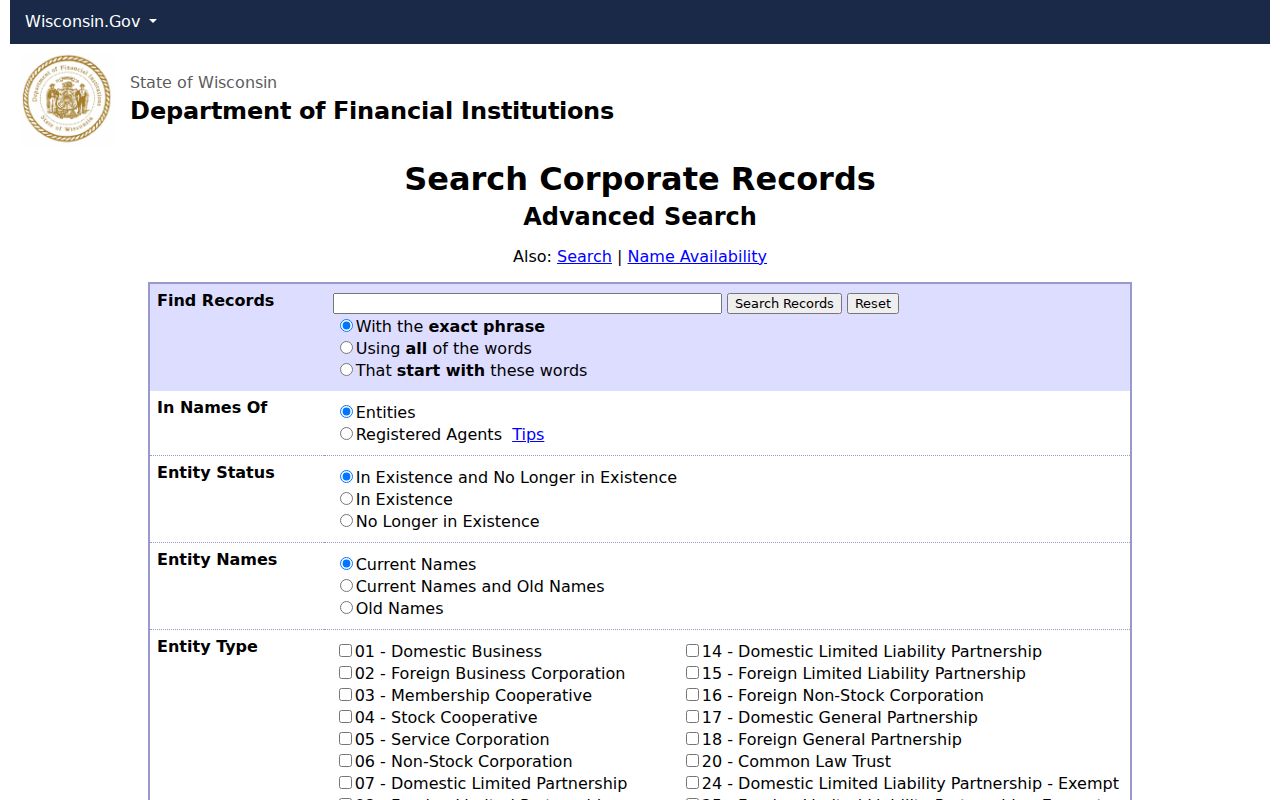
Clarify the entity name in DFI, then confirm the land interest in the recorded deed.
Compare Iowa County Owner and Sale Clues
A last-sale date or price is a clue, not proof of ownership. The deed behind it may not be a market sale. It may be a family, trust, sheriff, correction, or estate transfer. Wisconsin's sales study screens out some of these non-market transfers. Read the instrument type and grantee first. Then use the assessment card only for current parcel and value context.
A newly closed property needs the newest recording before you trust the roll. An older owner question calls for the full deed chain, not a single current-owner field. A remote record may need staff confirmation. The Register of Deeds offers a published copy route for those.
Co-owners create another trap. The assessment roll may shorten a long name string and drop how interests are vested. Open the deed. See whether ownership is joint, held in trust, or a partial interest. An instrument may cover only a defined portion or an easement. It does not make its grantee the sole owner of the entire parcel.
Keep your result anchored before sharing it. Pair the parcel number with the lookup date and record source. A bare name is easy to confuse with a similar person or entity. The county assessment portal and the Register of Deeds index offer complementary evidence. Yet neither public display replaces a title examination when real assurance is needed.