
Find Who Owns an Iowa County Property
Start with what you have. A street address, a parcel number, or even a partial owner clue is enough. That is all you need to begin an Iowa County property search. From there, move from the tax roll to the recorded deed. The route matters. Iowa County's assessment search is a roll of parcel information. The Register of Deeds records the instruments that give public notice of a transfer. A recent closing can also land in the deed index first. The assessment roll catches up later. Whichever system you use, confirm the same legal description. Move carefully between them so the parcel and the deed line up.
- Search the Iowa County Tax / Assessment Record Search by the known address or owner name and note the parcel ID.
- Read the owner-of-record and mailing fields separately, then compare the situs and municipality.
- Search the latest grantee in LandShark and confirm the legal description on the recorded deed.
- If the name is an LLC or corporation, check its exact legal name in Wisconsin DFI records.
Where Iowa County Owner Records Come From
No single source gives a complete ownership picture. Each record serves a different purpose and carries its own date. The county assessment tool lists the owner tied to the tax roll. Its exact field labels and refresh schedule go unlisted. LandShark shows the grantor and grantee on a recorded instrument. GIS helps match the parcel to a location on the map. Together, these property records narrow a search toward the true owner of record.
| Source | Owner Info It Gives | Access |
|---|---|---|
| Assessment roll | Owner field, parcel, and tax mailing clue if shown. | County Tax / Assessment Record Search; live labels unverified. |
| Register of Deeds | Grantor, grantee, document reference, and recorded instrument. | LandShark, courthouse public computers, or staff retrieval. |
| GIS Hub | Mapped parcel location and surrounding geometry. | Public mapping gateway; exact identify popup unverified. |
| Wisconsin DFI | Entity name, registered agent, address, status, and filing history. | Public corporate search; not a title record. |
The owner of record is the party carried in an assessment record. That party is not always the person living at the property. A mailing address can belong to a tax agent. It can also be an estate, a lender, or a business. The parcel's physical situs and its postal city are separate clues. To pin down the present owner, follow the current owner record steps. To trace earlier transfers, work back through the former-owner chain in the deed records.
Limits of an Iowa County Owner Search
An owner lookup names the person or entity on a public record. That is all it does. It cannot show occupancy, the owner's daily whereabouts, or clear title. Claims missing from the index stay invisible. Wisconsin Safe at Home runs an address-confidentiality program for eligible participants. Some records therefore carry protected or redacted details. Use these sources for property diligence. Take sensitive questions to the custodian of the record.
Lawful use. Use an Iowa County owner lookup for property research, a purchase, an estate matter, or civic review. Do not use a name or mailing address to stalk, threaten, or harm anyone.
Iowa County LLC Owners and DFI
The owner of record on an assessment is sometimes a company, not a person. Search the deed under the entity's full legal name. Then compare that spelling against Wisconsin DFI's Corporate Records Search. DFI reports the legal entity name, registration date, entity type, registered agent and office, entity ID, status, and annual-report history. The advanced form matches names, current or former names, entity or agent names, status, and registration dates. DFI does not list FEINs. It also omits domestic LLC member names, phone numbers, sole proprietors, DBAs, or most general partnerships. A registered agent is a service contact, not proof of who holds the land. DFI's advanced entity search page displays those name and status filters. That helps resolve the exact name used in a deed. The Wisconsin DFI advanced search documents them.
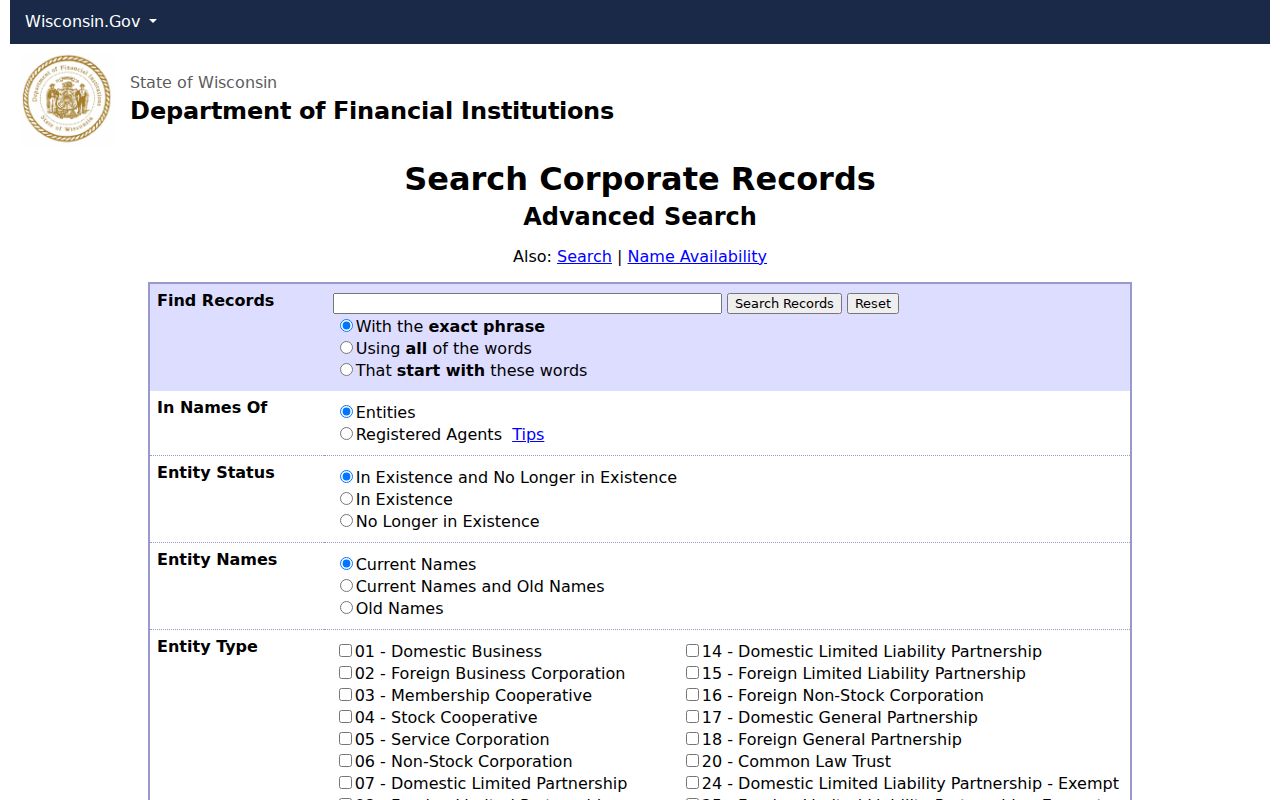
Treat the entity result as a name reference only. Then return to the Register of Deeds, where the recorded grantee and land description settle the question in the official property records.
MyVote Does Not List Iowa County Owners
MyVote Wisconsin handles elections, not land records. A voter address, even one shown there, never proves title to a parcel. Protected addresses can also be suppressed. The official state lookup page exists for election information alone. That is why the MyVote Wisconsin portal belongs in this discussion only to rule it out of a property search. For ownership evidence, use the county assessment roll and recorded deed instead.
Wisconsin keeps its election system separate from its land-records system. The recorder and assessor maintain the documents that establish the owner of record for a parcel. The election agency does not.
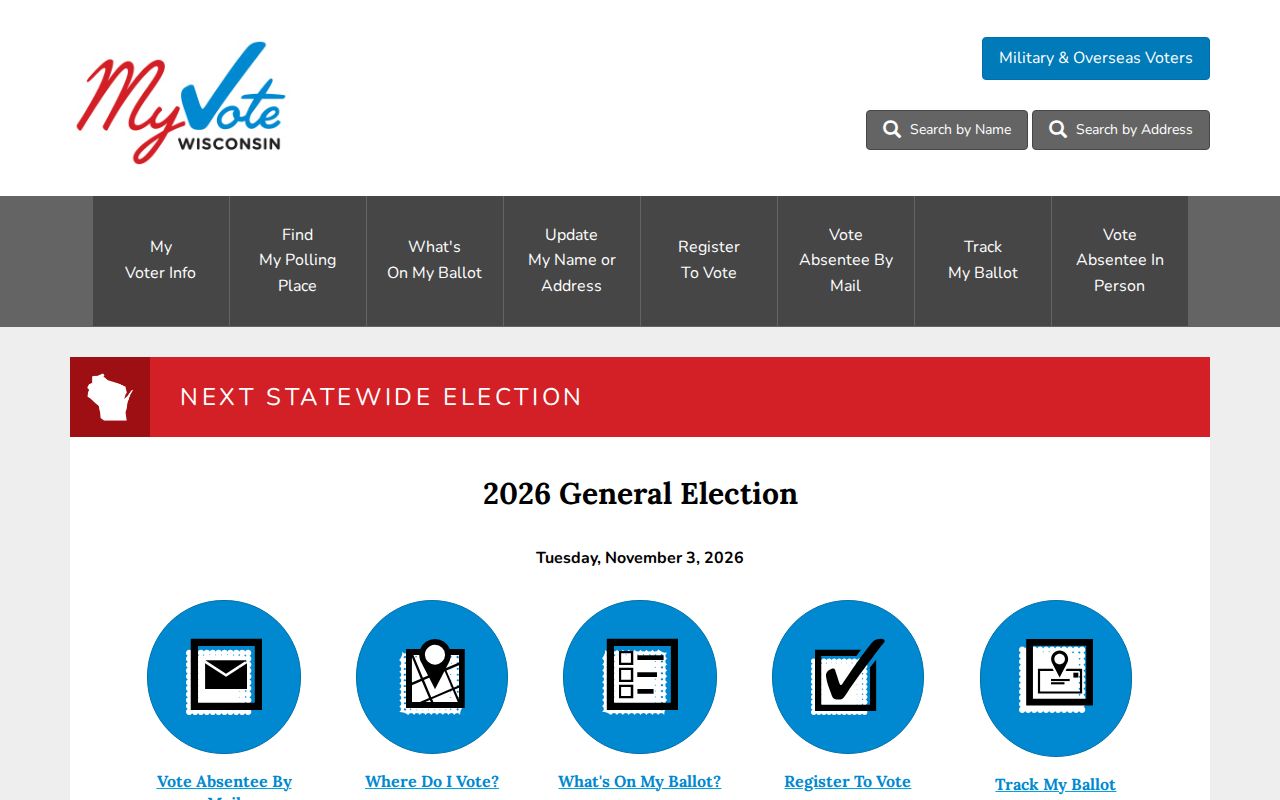
Rely on the county assessment roll and the recorded deed to identify the owner of record for any property question.
Iowa County Mailing and Situs Clues
Situs is simply where the land sits. The tax mailing address is different. It tells you where the treasurer sends a notice, not where the parcel lies. The two often split apart. An owner may live in another state. An estate may pay the bills. A company may list a registered office. Postal city names blur things further, since one can cross a city, village, or town line. Before you pick a permit or tax custodian, check the assessment municipality and the county GIS boundary to settle the labels.
The county forms page offers an Address Number Application. It is a planning record for new or changed rural addressing. A changed number can make an old search look empty. The parcel and deed chain still continue under a different description. Rural parcels often carry a section description. Some use a route address, and others use a newly assigned number rather than a street style label.
Never assume a mailing address marks the owner's residence. It rarely does. The assessment account ties the current labels together, while a deed's legal description shows exactly what land the grantor conveyed. When the street name and the tax roll disagree, bring the parcel ID and plat references to the custodian and ask a narrower question.
Probate and Iowa County Estate Transfers
After an owner dies, the assessment roll may still list the decedent. It may also show an estate, a trust, or a personal representative. Probate explains the gap. A case summary can surface through the court system. The circuit court clerk keeps the complete file. Documents such as an inventory, a personal-representative appointment, an order for sale, or a final judgment matter here. They show why a deed might name an estate rather than an individual buyer.
Work in both directions at once. Search the decedent's name, then search the parcel description. Compare any personal-representative deed in the Register of Deeds index. Death certificates carry eligibility limits, especially for recent records. Treat a recorded deed, not a certificate, as the real evidence of a land transfer. The former-owner chain traces those earlier transfers backward.
An Iowa County Deed Can Be Newer
A closing can reach the Register of Deeds before the assessor updates the owner field. So a fresh deed is often newer than the roll. The grantor-grantee index confirms recent transfers better. The roll still supplies parcel and tax context. Compare recording date, parties, and legal description. A last-sale label may be missing, or it may rest on a non-market transfer.
Update timing varies. When timing matters, call the Register of Deeds or ask the assessor whether the current roll includes the most recent recording.
Trust the recording date, not just the closing date. A seller can sign one day, present the instrument later, and see it indexed after that. Compare the grantor's name with the prior deed. Verify the legal description too. A deed covering only an easement or a fractional interest does not replace the full owner-of-record entry.
Iowa County Index Restoration and Owner Checks
A 2025 cyber incident disrupted Iowa County land-record search and image retrieval. The county says no documents were lost. Its August 2026 notice describes a rebuilt grantor-grantee index covering 1835 to the present. Availability and verification still vary by year. A missing online deed is not proof that a transfer never happened. Check the current status notice first. Then use the courthouse public computer. Or ask staff with a document number, date, volume and page, or legal description. The Iowa County restoration page explains the rebuilding status.
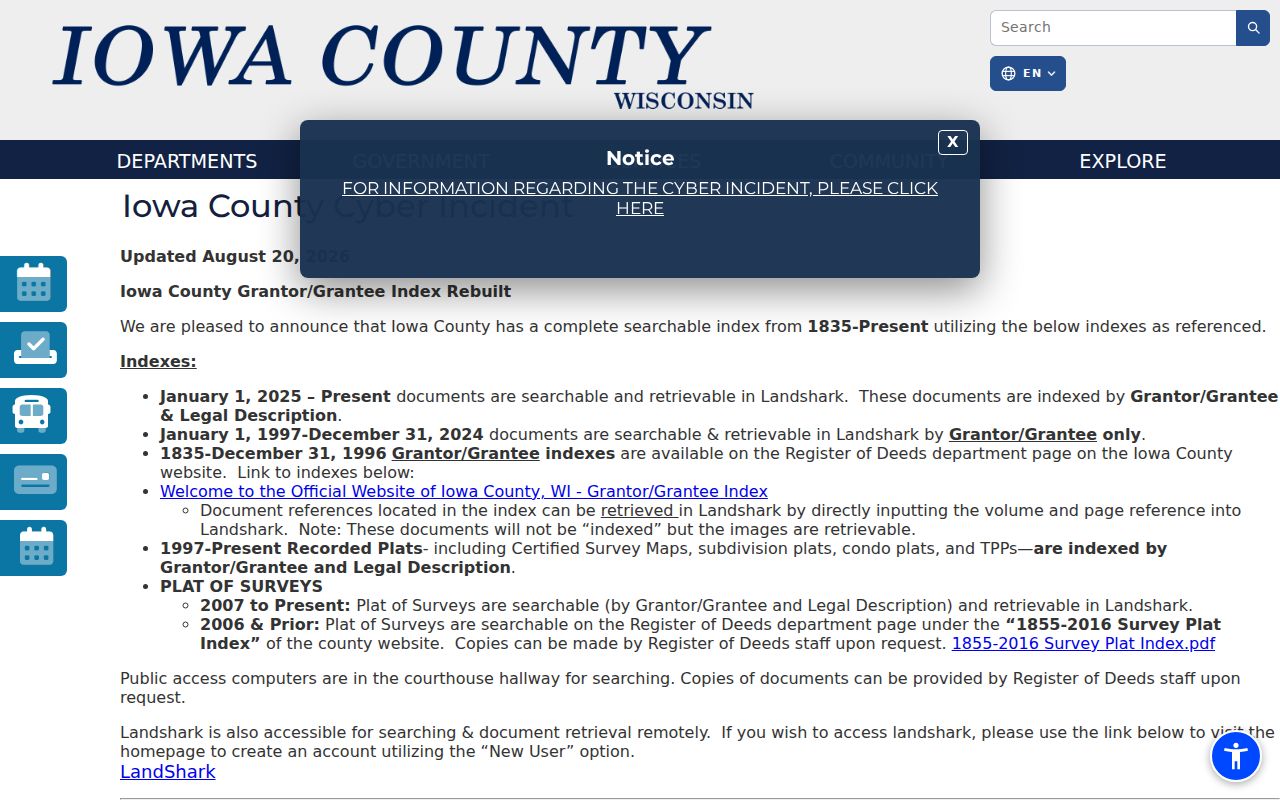
Confirm a new owner's name against the latest verified deed, especially if the assessment card seems dated.
Public Lookup Results Are Not an Ownership Record
Wisconsin runs public information tools for purposes other than land-title research. A Department of Corrections locator entry pairs a name with an address. It does not prove ownership. It does not prove occupancy or control either. Never treat a state public-safety listing as an ownership shortcut. Ownership rests in the Iowa County assessment record. After a recent transfer, it rests in the recorded deed. The Wisconsin Department of Corrections public locator is a separate state information service. It is not an Iowa County deed or owner search.

Use the locator only for its stated public-information purpose. For parcel ownership evidence, return to county land records instead.
The Wisconsin sex-offender registry entry page presents conditions of use before visitors continue.
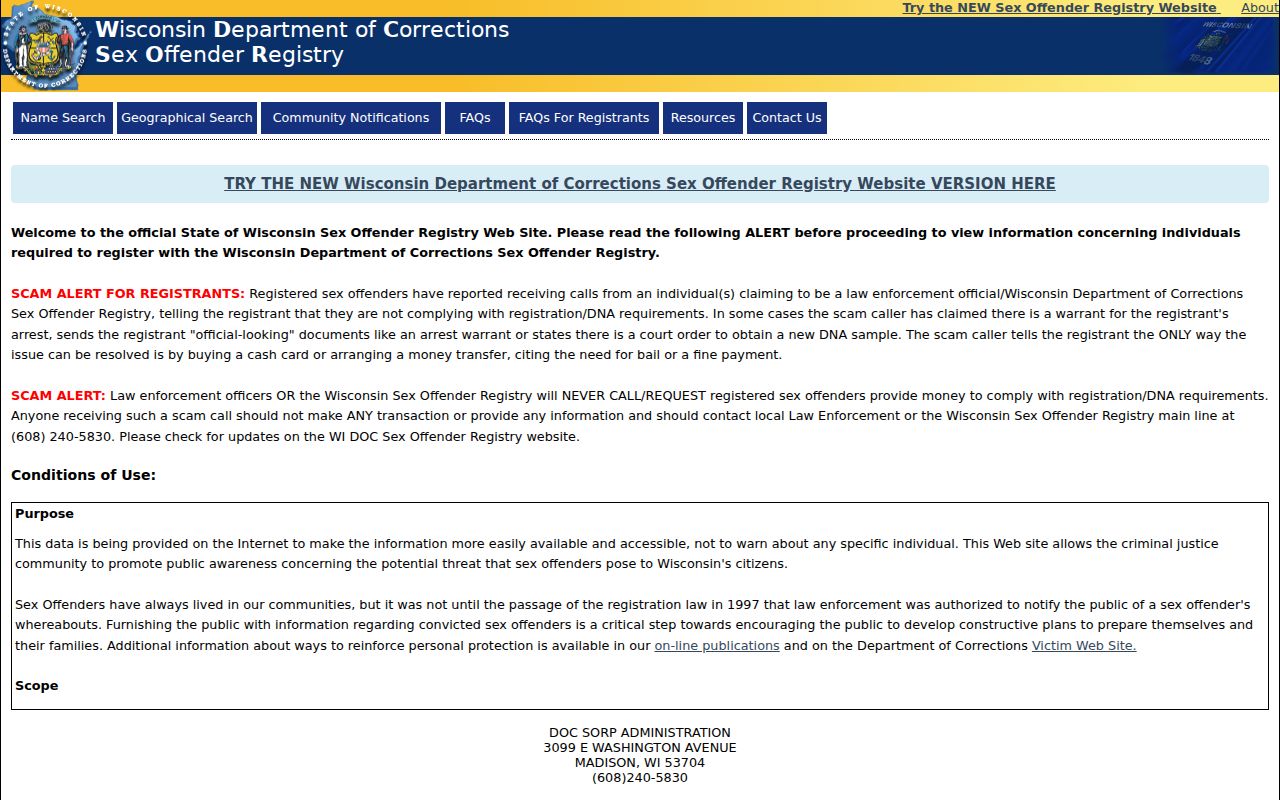
Read the registry's current conditions. A registry address is not a deed, parcel boundary, or finding of title.